Stop Trying To Create A Category. Own A Segment Instead.
TL;DR
Most B2B “category creation” is theater. Real category creation takes 6-10 years, $100M or more, and a once-in-a-decade market shift. Almost nobody who claims to be creating a category actually is. The reliable play for 99% of B2B companies is owning a segment: pick a specific buyer inside an existing category, focus on an ignored struggle they care about, name the enemy they already hate. That’s how you stand the f*ck out without waiting a decade.
I tried to create a category once. It cost me $20,000 and 18 months.
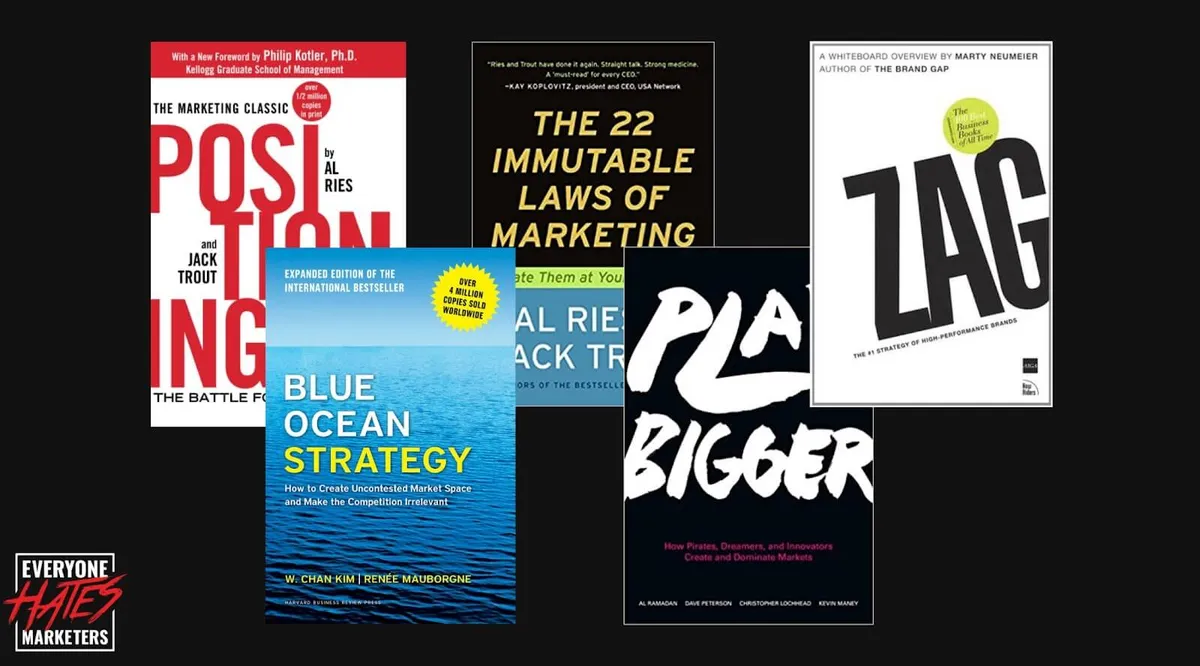
Back in 2015, I had saved up $20,000 to start my own business in Dublin. My idea: help local businesses make more money online through conversion rate optimization (CRO). I thought I was on to something because no one else was doing it locally.
It didn’t occur to me that maybe, just maybe, no one was doing it locally because the demand didn’t exist.
In Chapter 7 of Stand The F*ck Out (“The Category”), I tell the full story. Short version: I spent 18 months trying to sell CRO in a market that wanted SEO, ads, and social media management. I was, as I describe it in the book, “a chef trying to convince Irish tourists to try snails with garlic-herb butter when all they wanted was lasagna.” I closed the agency. Mentally drained. Broke.
That failure taught me what every B2B team chasing “category creation” should hear. Quoting Eugene Schwartz directly from Chapter 7:
“You can’t create demand for anything because demand is too large for you to create. The demand has to be out there.”
Demand is a market force. You don’t create it. You find it and position against it.
Yet every B2B SaaS deck in 2026 has a slide that says “we’re creating a category.” Most of them aren’t. They’re renaming a subcategory, rebadging a feature, or printing a manifesto and hoping investors nod. Here’s how to tell the difference, and what to do instead.
The STFO category creation test
You haven’t actually created a category if any of these are true:
- No independent analyst (Gartner, Forrester, G2) has created a Magic Quadrant, Wave, or Grid for it
- Buyers don’t search the category name without your brand attached
- Your sales reps have to explain the category before they can pitch
- Your category doesn’t appear on any job title, job description, or RFP template
If any of those is true, you’re doing messaging, not category creation. That’s fine. Most B2B companies should be doing messaging. Just don’t confuse it for strategy. And don’t raise capital as if you’d already crossed a bridge you haven’t started building.
Category creation vs category design vs owning a segment
Three terms get thrown around interchangeably. They’re not the same thing, and the distinction is load-bearing.
| Term | What it means | Cost | Who should try it |
|---|---|---|---|
| Category creation | Inventing a new category from scratch | $100M+, 6-10 years, a once-in-a-decade shift | Roughly 0.1% of B2B companies (and yes, that’s an estimate out of my arse) |
| Category design | Shaping how the market sees an existing category you fit into | Months of strategic work, modest budget | Most B2B companies |
| Owning a segment | Becoming the only option for a specific buyer inside an existing category | Weeks of research plus obsession | 99% of B2B companies |
| Challenging conventions | Staying inside an existing category but breaking 1-2 of its norms | Repositioning effort | Complements all of the above |
Category creation is what every founder wants. Category design (as April Dunford uses the term) is what most companies actually need. Owning a segment is the STFO answer. Challenging conventions is the tactic that complements it.
Why most “category creation” case studies aren’t what you think
Take the Blue Ocean Strategy book’s canonical example: the French company SEB and their air fry maker. 40% fewer calories, 80% less fat.
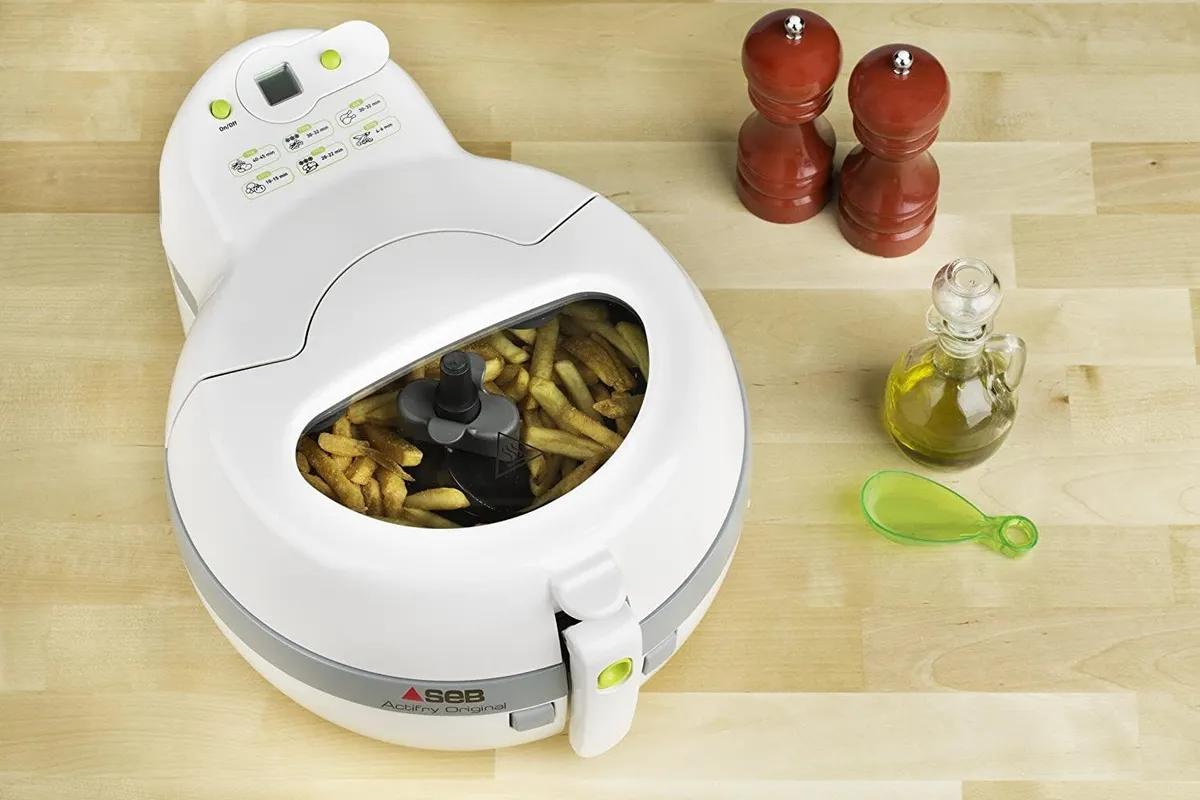
It’s not a new category. It’s a subcategory. Everyone already knew what a fry maker was. SEB didn’t have to educate the market. They leaned into what people already knew and carved out a segment, people trying to eat less fat.
HubSpot gets the same treatment. People credit them with creating “inbound marketing.” Ask Meghan Keaney Anderson, their ex-VP of Marketing:

“Let me be clear. I do not think that you have to create a category. I think that you have to name the enemy, and so inbound marketing became a category. But with or without that category, we still needed to name outbound [marketing] and irrelevant ads as the enemy. What’s essential to name is what you’re fighting against, not the category you’re in.”
That’s the trick. HubSpot named the enemy (interruption, spam, forms-that-go-nowhere). “Inbound marketing” emerged as a byproduct of that fight. They weren’t trying to create a category. They were trying to beat specific practices their buyers already hated.
4 reasons most B2B companies should not try to create a category
Reason 1. The cost is brutal.
April Dunford, positioning consultant and author of Obviously Awesome:
“What we’re doing is so amazing. It’s so wild. It doesn’t fit in a bucket anywhere. So I got to create my new market to do it. This is actually the most difficult style where you first have to prove to people that your market deserves to exist. And then you got to position yourself in that market as the best choice. It takes money, time, effort. Generally, only big, venture-backed companies with deep pockets and very mature, patient investors can pull that off.”
Play Bigger’s research puts the average category creation timeline at 6 to 10 years. Most B2B SaaS runways don’t stretch that far.
Reason 2. You don’t get to decide.
Categories aren’t declared. They emerge. Usually because of a massive political, environmental, cultural, or technological shift that the company happened to ride. The company didn’t cause the shift. The shift caused the category.
HubSpot didn’t create inbound marketing. The combination of spam-fatigue, content platforms, and Google rewarding useful content created the category. HubSpot named it.
Reason 3. Your product isn’t as different as you think.
Youngme Moon, author of Different, has a name for this: category connoisseurs. Founders and in-house marketers are so deep in their product that a 10% differentiation feels like a 100% leap. To the buyer, you all look the same.
Test it. Ask 20 target buyers to describe what you do in one sentence. If they put you into a category that already exists, you’re in that category. Their vocabulary wins, not yours.
Reason 4. You’re trying to create demand that doesn’t exist.
This is the one most people miss, and it’s the one I learned the hard way in Dublin. Category creation is, at its core, an attempt to create demand. Marketing campaigns don’t create demand. Technological shifts, regulatory changes, generational habits, crises: those create demand.
If the demand isn’t there, no amount of category naming, thought leadership, podcast sponsorships, or manifestos will make it appear. You’ll burn time and money trying to educate a market that didn’t ask to be educated.
What works instead: owning a segment
Forget creating a category. Pick a segment inside an existing one and own it.
In Chapter 6 of Stand The F*ck Out (“The Segment”), I define a segment as a group of people who experience a specific ignored struggle more frequently or more intensely than the broader market.
Three characteristics of a segment worth owning:
- Narrow enough that you can win. If the segment is “all B2B SaaS companies,” you’ve lost. If it’s “pre-Series-B B2B SaaS founders still running sales themselves who just hired their first AE,” now we’re talking.
- Painful enough to buy. If they’re not losing sleep over this problem, they’re not paying for it.
- Connected enough to talk. If they don’t share Slack groups, conferences, LinkedIn circles, or subreddits, your word-of-mouth engine has no track to run on.
Then do the work. Become the obvious choice for that one specific buyer before you even think about expanding.
Four B2B companies that own a segment without creating a category
PR.co
PR software for large brands where getting it right matters. Category: PR software. Nothing new about the category. They sell to comms teams at Shimano, Just Eat Takeaway, Wise, Polaroid, Doctors Without Borders, Wolt, and Canyon. Segment: large, high-stakes brands where a botched press release damages the brand more than it saves time. They didn’t invent a category. They picked the buyer who can least afford generic PR tools and became the obvious choice for that buyer. 4.7 on G2, 4.6 on Capterra.
Vialytics
B2B SaaS for municipal road management across 300+ European cities. Category: public works software (the stuff cities already use). Nothing new there. Segment: small-to-mid European municipalities whose road inspection currently runs on spreadsheets and seasonal field visits. They didn’t create “AI-powered infrastructure inspection.” They owned one specific buyer archetype in an unsexy category. That’s the moat.
Balsamiq
Balsamiq’s case study is the textbook segment pivot. Wireframing tool, 15 years old, had been marketing to designers, who were only 10% of revenue. We repositioned them to product teams (the buyers who actually pay). Result: 40% or more increase in qualified trial signups. They didn’t invent “product wireframing” as a category. They picked the right segment inside an existing category and reshaped every touchpoint around that buyer.
Leadsie
Leadsie’s case study is another textbook segment move. Access and permission management for digital marketing agencies. Category: onboarding and client access tooling. Segment: digital marketing agencies that spend hours every onboarding getting clients to grant access to their ad accounts, Google Analytics, Search Console, and the rest. After a repositioning roast, their numbers: +93% data activations in 14 days, +44% account creations, +32% weekly signups. Same product. Same category. Sharper segment, and every message rebuilt for that segment.
Common mistakes B2B teams make with category creation
- Calling repositioning “category creation.” If you just renamed your product, added an adjective, and printed a manifesto, that’s messaging. Don’t confuse it for strategy.
- Building a category name before the segment is picked. The category name is the last step, not the first. Segment, then ignored struggle, then enemy, then category name.
- Chasing “unique” instead of “meaningful.” Being different for its own sake doesn’t move buyers. Seth Godin’s frame still holds: “How do we make it different so it IS remarkable?” not “How do we make it just like others and make it remarkable?” Meaningful differences beat random ones every time.
- Ignoring the 6-10 year runway. If your board will ask about MRR in six quarters, you are not creating a category. You’re doing messaging. Budget and name it accordingly.
- Copying public category creators without knowing the conditions. Specific companies rode specific shifts (spam-fatigue plus content SEO, remote work plus conversational tools, phones plus mobile-first UX). Those conditions aren’t yours. The playbooks aren’t portable.
FAQ
What is category creation?
Category creation is the deliberate, strategic effort to establish a new market category, a new way to group products or services that didn’t exist before. It’s rare. It takes 6 to 10 years on average, tens or hundreds of millions in capital, and usually depends on a massive underlying shift (technological, regulatory, cultural) that the company rides to the top. Play Bigger and Christopher Lochhead’s work are the canonical references.
What’s the difference between category creation and category design?
Category creation means inventing a brand new category the market doesn’t recognize yet. Category design, as April Dunford uses the term, means shaping how the market perceives an existing category you fit into, choosing which category to position in and how to communicate your place in it. Category design is much more achievable for most B2B companies.
What are examples of B2B companies owning a segment?
PR.co (PR software for large high-stakes brands), Vialytics (public works software for small-to-mid European municipalities), Balsamiq (wireframing for product teams instead of designers), Leadsie (access management for digital marketing agencies). All four stayed inside an existing category and became the obvious choice for a specific buyer within it.
How long does category creation take?
Play Bigger’s research puts the average at 6 to 10 years. Most of the widely-cited public examples (HubSpot, Salesforce, Workday, Atlassian) took more than a decade to establish their categories in analyst reports, buyer vocabulary, and job descriptions. Most B2B SaaS companies don’t have a 10-year runway, which is why owning a segment is the more reliable play.
What’s the difference between a category and a segment?
A category is a label for a group of similar products (for example “PR software”, “wireframing tools”). A segment is a specific group of buyers who experience a specific ignored struggle more frequently or more intensely than the broader market. You don’t own a category by being in it. You own a segment by being the obvious choice for a specific buyer.
Can a small B2B company create a category?
Technically yes. Practically almost never. The conditions required (massive market shift, patient capital, a decade of runway, a buyer base ready to adopt a new framework) rarely line up for small B2B companies. The reliable play is owning a segment, which can be executed in months with a small team.
What is “the niche thing” that April Dunford talks about?
It’s the same move: owning a segment. Dunford describes it as picking a specific vertical or buyer type, winning there, then expanding to adjacent segments once you have credibility and traction. Geoffrey Moore called this the bowling pin strategy in Crossing The Chasm. Knock over the lead pin, then the adjacent pins follow.
Is category design the same as positioning?
They overlap. Positioning is the deliberate choice of what category you’re in, who you’re for, and why you’re the best. Category design is a subset of positioning focused specifically on the “what category” question. You can do excellent positioning without obsessing over category design. You can’t do excellent category design without solid positioning underneath.
The take
Category creation is probably one of the most overrated strategies in B2B.
It sounds visionary in a pitch deck. It reads well in a manifesto. It makes founders feel like they’re building something legendary. And it fails 99 times out of 100, because the demand you’re trying to create doesn’t actually exist yet. You can’t make a tornado with a $35 desk fan.
What tends to work: pick a segment inside an existing category. Obsess over the one buyer who experiences a specific ignored struggle more intensely than anyone else. Name the enemy that buyer already hates. Be the obvious choice for that one buyer before you even consider expanding.
You don’t need to create a category to stand the f*ck out. You need to own a segment so thoroughly that the category name doesn’t matter.
Related episodes
Key terms
Category
A category is the group of things that solve similar struggles in a similar way. It is the most underused positioning lever. You cannot create demand from thin air. Pick a category where demand already exists and your segment already understands what you do.
Category Creation
Category creation is for the 0.01%. For everyone else, trying to create a category means trying to create demand, and you cannot create demand. It's a force of nature, not a growth-hacking campaign. Position in a category where demand already exists.
Blue Ocean Strategy
Most 'blue oceans' are blue because nobody wants to swim there. Uncontested market space usually means zero demand. Position in a category where demand already exists and stand out by solving ignored struggles, not by inventing a market nobody asked for.