The Roast of Hostinger Horizons
Score Breakdown
Picture this: me at 16, hunched over my desk computer in my bedroom, web builder Dreamweaver open, absolutely convinced I’m about to build something brilliant.

Not a real picture. This is AI-generated.
The project? Curling Passion. Not a real passion for curling, mind you… we’d just watched it on TV during the 2006 Torino Olympics and thought it was the most ridiculous sport we’d ever seen. We invented our own rules, created new roles (like the “Sniferiste,” in charge of sweeping the floor since we didn’t have ice), and did our best to convince everyone we were very serious about it.
No one really understood or found it funny, which we found very funny. The problem? I didn’t know how to code. And I didn’t have the patience to learn. So I ended up ditching Dreamweaver and used a ready-made forum builder to create a space where we could talk about it after school. We even created our own website, Curling Passion (dot) fr. (I can’t find any evidence of it now, but it really existed.)
***
That was 2006. Nearly 20 years ago.
If I were that same 16-year-old today, I wouldn’t touch Dreamweaver. I wouldn’t even touch Wix or Squarespace. I’d probably try one of the new AI-assisted no-code platforms that promise to build websites and apps through simple conversation.
And here’s what’s wild: my failed teenage dreams teach us everything about why some website builders stand the f*ck out and others blend the f*ck in.
Because the barriers I hit in 2006 (the complexity, the technical knowledge required, the patience needed) are the exact same barriers these AI platforms are trying to eliminate. Some will succeed. Most will fail. The question is: which ones, and why?
***
Bienvenue to another Stand The F*ck Out Roast, where we take brands, rip them apart with savage honesty, and show exactly how they’re standing the f*ck out (or blending the f*ck in).
We’ve roasted Leadsie, Tim Soulo’s Ahrefs Podcast, my own journey with Tilt Publishing, and LaunchBay (formerly Motion.io). Today? We’re roasting an AI-assisted website and app builder called Hostinger Horizons (use the code “STFO” at checkout to get 10% off on ALL of their products).
Quick context: Hostinger is one of the world’s largest web hosting companies, with over 1,000 employees, serving 4+ million customers globally. A few years ago, I worked with their CMO on customer research strategy. Now they’ve launched Horizons, their AI-powered builder that promises to let anyone create websites and apps without coding.
The question isn’t whether Horizons works. It does. The question is whether they’re positioned to win in a category that’s about to fragment like website builders did 20 years ago.
Let’s find out.
Stage 1: Insight Foraging
What Dreamweaver Got Right in 1996
Before Dreamweaver became the bloated mess that eventually killed it, before Adobe acquired it and watched it slowly fade into irrelevance, there was a moment when the team actually got it right.
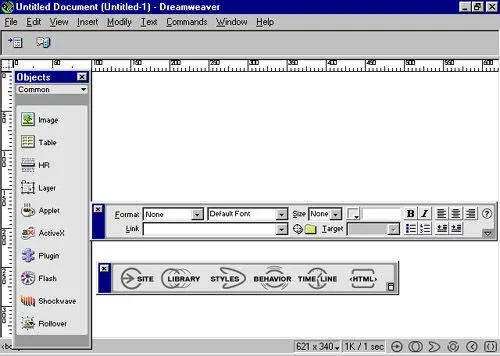
Dreamweaver in 1997. Source.
1996. Kevin Lynch had just joined Macromedia. And instead of assuming he knew what web designers wanted, he did something radical: he spent months interviewing professional web designers to understand their actual needs. He compiled everything into what became known as the “19 Dreams” document… a list of specific features web developers wanted in an ideal web editor. Not what Lynch thought they should want. Not what seemed cool. What they actually f*cking wanted.
The result? A tool priced at $495 that became the industry standard. By October 1999, an estimated 66% of professional web developers were using Dreamweaver. It dominated for over a decade.
Fast Forward to 2025: They Never Stopped Listening
Years ago, I worked with Hostinger’s CMO on a coaching project. One of the exercises I made you do? Set up a round-robin interview process where everyone (not just marketers, but developers, designers, the entire team) would talk directly to customers. You ran more than 1,500 interviews.
Fast forward to Hostinger Horizons’ launch. Before releasing your AI-assisted website and app builder, you conducted 100+ more interviews. Digging deeper into what success looks like for customers, where they could improve, what was actually working.
Here’s what you told me:
“That direct feedback has been a rewarding experience and a vital part of shaping Horizons into a tool people love and rely on.”
After all these years of growth, after building a massive web hosting company, after expanding across dozens of countries… you’re still doing the Kevin Lynch thing from 1996. You’re still listening.
That’s f*cking rare.
Why Knowing Isn’t Enough (The Real Gap)
So do you understand your customers? Absolutely. Do you know what people are trying to accomplish with Horizons? Yes. Do you understand the struggles and frustrations? Without question. However, knowing your customers deeply doesn’t automatically translate into winning your category. And the AI-assisted programming market is moving much faster than the OG website builder one.
So, because you operate in such a fast-growing, immature category, I needed to dig deeper than your interview insights. Here’s what I did:
Insight Foraging Method #1: Community Mining
I used Hostinger Horizons to build a tool that (1) finds relevant posts inside subreddits of direct competitors (Lovable, Replit, Bolt, Base44) and (2) extracts the content of each post and comment. People complaining, celebrating, switching platforms, hitting walls.
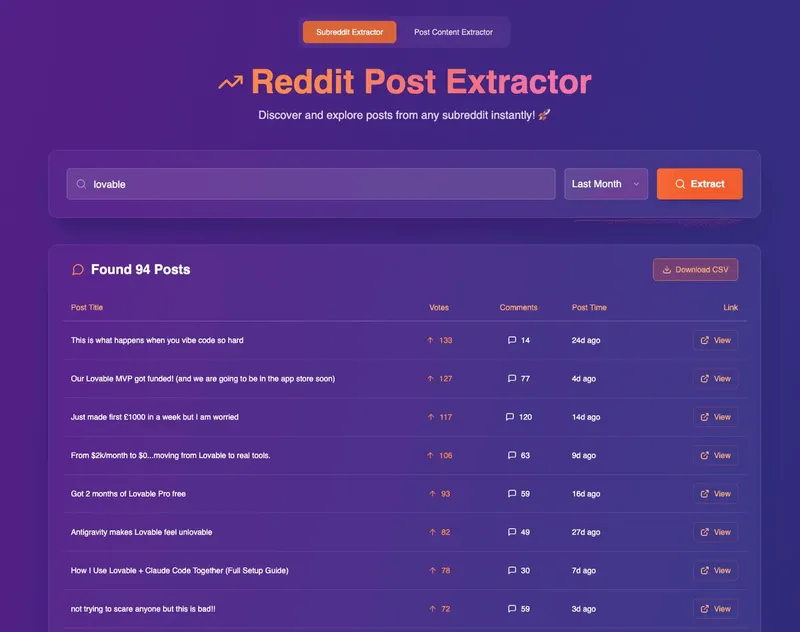
Insight Foraging Method #2: Market Landscape Analysis
I researched the AI-assisted programming market broadly, but also went deep into the history of website builders. From WYSIWYG editors in 1974 to the cloud revolution of 2006. I wanted to zoom out to make sense of the AI chaos.
Insight Foraging Method #3: Method Marketing
I actually built a couple of tools with Hostinger Horizons to make my analysis faster and to learn the product.
What I found confirmed your customer understanding was solid. But it also made something very clear: the positioning decisions you make in the next 3 to 6 months will matter infinitely more than making your brand more distinctive or polishing your GTM strategy.
This isn’t 2006, when Wix and Squarespace could grow steadily by being “easier than Dreamweaver.” This is a category that’s exploding, fragmenting, and getting more serious simultaneously. The AI no-code space is speed-running 30 years of website builder evolution in 3 years.
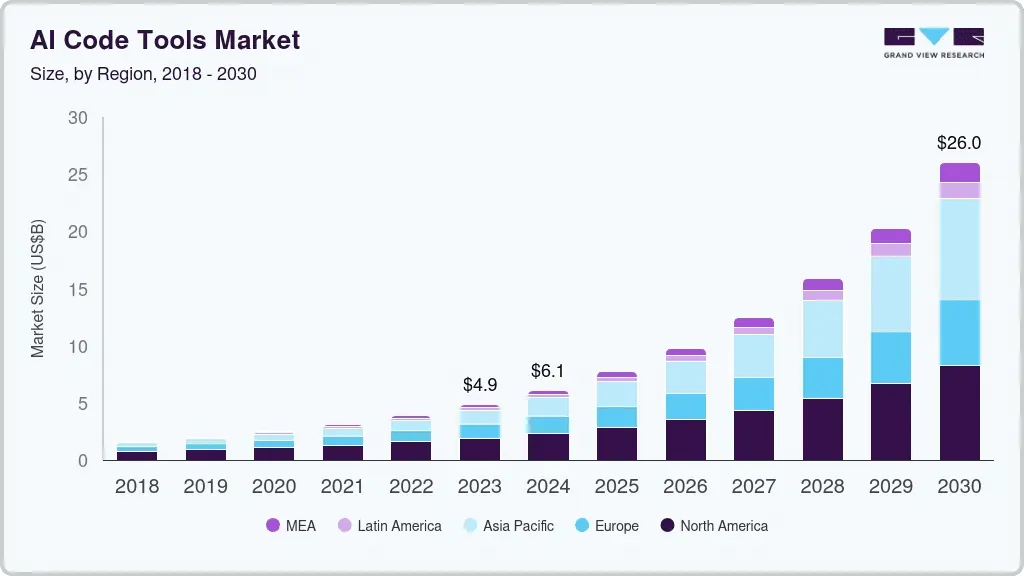
AI Code Tools Market Size by Region (2018 - 2030) according to GVR.
The Verdict
Score: 4.5 out of 5
What you nailed:
-
Great customer understanding thanks to hundreds of conversations with users
-
Remaining cool, calm, and collected and sticking to basics
-
Following the 1996 Dreamweaver playbook: build what people actually want
So look… You have done the hard work of understanding your customers. That’s the foundation. But in this market, at this moment, that foundation needs to support a very specific strategic direction.
And that’s what we’re going to figure out in Stage 2.
Stage 2: Unique Positioning
Stage 1 showed you understand your customers. You talk to them, you listen, me likey. Next? Giving them a compelling reason to choose you. In other words, why should someone pick you over hiring a freelance developer, using Lovable, or just learning to code themselves?
And here’s something I’m going to spend this entire stage proving: at your stage of growth, in this exploding category, your choice of positioning matters INDEFINITELY more than your brand distinctiveness, your feature set, or how pretty your interface looks.
You’re standing at a fork in the road with three very different paths ahead. Each one leads to a completely different go-to-market (or GTM) strategy. And you need to pick one.
Allons-y.
Job: What Are People Hiring Horizons to Do?
You are crystal clear on what people “hire” Horizons to do: “launch my idea.” Whether it’s an e-shop, a custom tool, or a professional presence, your users want to go from a thought in their head to a live link in minutes. You’ve nailed this.
Alternatives: What Are People Using Instead?
Understanding alternatives means knowing what else people could choose instead of you. And this isn’t just your direct competitors… It’s EVERYTHING competing for their solution.
You have a bunch of direct competitors, including:
-
Lovable (raised $330M in December 2025, aggressive growth)
-
Replit (established, developer-focused)
-
Bolt (fast growing, similar positioning)
-
Base44 (smaller player)
But the real alternatives are broader:
-
Hiring freelance developers/designers
-
Traditional no-code platforms like Webflow or Framer
-
WordPress + themes
-
Shopify/Wix for specific use cases
-
Learning to code themselves
Again, you’re pretty clear about this, too.
Struggles: What’s Stopping People?
Alright, this is where we are faced with a decision that would dictate the rest of this roast as well as your GTM initiatives. You’ve summarised it very well in your intake:
“Many of our users might be embarrassed to admit that after trying multiple alternatives, such as WordPress, traditional builders, even freelancers, they still didn’t get closer to where they wanted to be. They invested time, money, and energy, yet often ended up frustrated with half-finished projects, tools that felt too complex, or results that didn’t match their vision. Or all this led to them never giving it a try.”
That’s pretty spot-on, as we’ve seen a similar trend during our Reddit community mining and our broader research… with a big, fat caveat: AI no-code tools like yours do not solve this struggle either. At least not yet. This is literally the #1 frustration shared by developers when it comes to AI tools: 66% cite “AI solutions that are almost right, but not quite” as their biggest issue.
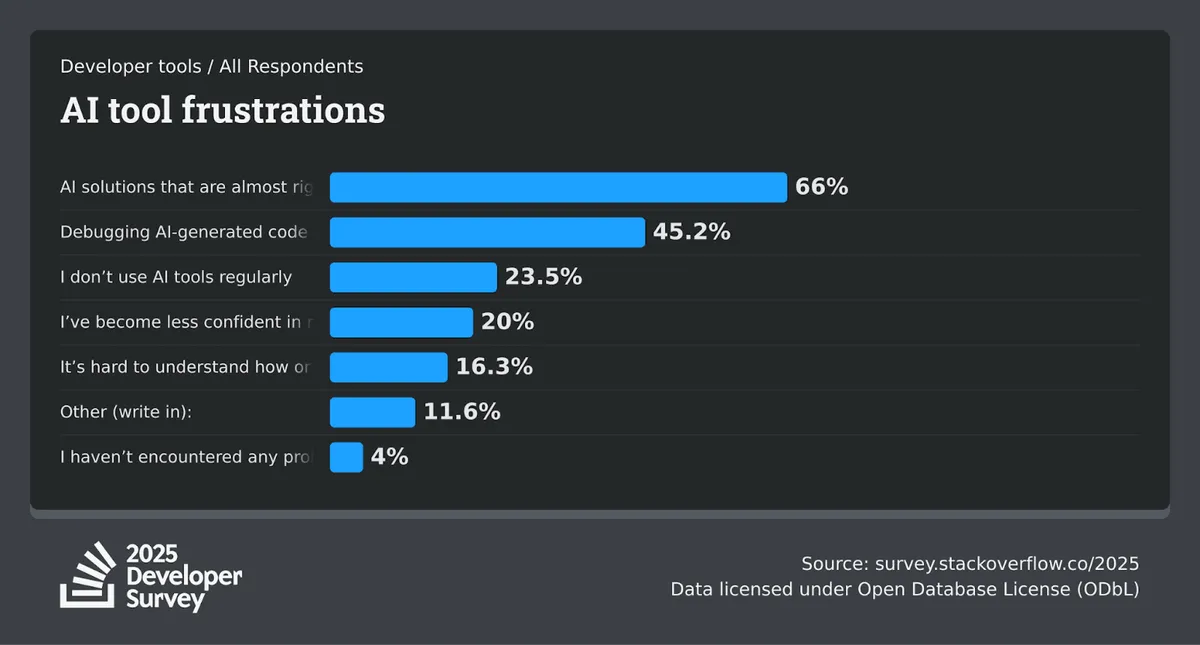
AI tool frustrations according to Stack Overflow 2025 Developer Survey.
So, what gives? In today’s reality (let’s call it Scenario #1), we cannot say, in good faith, that Hostinger Horizons (or any other direct competitor for that matter) solves this “I Don’t Know How Unfinished This Is” struggle.
And so we must focus on rational struggles that direct alternatives solve in a similar fashion:
-
Takes too long to learn coding
-
Hiring developers is expensive
-
Technical complexity creates friction
-
Speed matters for validating ideas
All true. All important. But there are not ignored struggles, which means that developing a UNIQUE positioning is impossible. Therefore, the only GTM play is to grow revenue inside that existing category, without a true competitive advantage.
But there’s a second scenario. What if Hostinger Horizons becomes the very first tool to help users actually finish what they started, so they stop agonizing over whether to keep fixing or abandon the project?
That would require a true product innovation, something that other competitors haven’t cracked yet. But it’s possible. In fact, looking back at the history of website builders… Microsoft FrontPage was notorious for generating bloated HTML code with unnecessary tags, inline styles, and proprietary features that worked properly only in Internet Explorer. But Dreamweaver, with their “19 Dreams” vision cracked it.
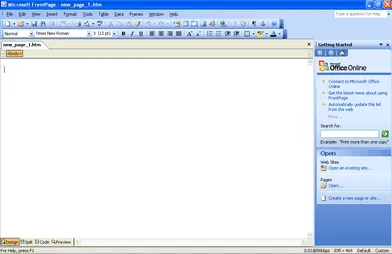
Microsoft FrontPage 2003 running on Windows XP.
What if you were the only AI platform that actually told users: “This is 95% finished. Here are the 3 things you need to check before going live. Here’s why we’re confident about that assessment.” Or something like that. What if you solved the confidence gap that every other alternative ignores?
And then there’s a third scenario. Instead of looking at AI website builders for anyone who wants to launch their idea (from everyday users with no coding experience to seasoned web developers), what if you zoomed in to identify use cases you could solve better than anyone… But without boiling the ocean?
In fact, this is exactly what happened in the early 2000s and the emergence of cloud-based website builders. At first, “generic” players entered the game, like Wix or Squarespace. But then, others spotted more specific use cases and thrived. For example, Spotify.
Could the same happen here?
Segment: Who Suffers Most?
Not everyone experiences these struggles equally. Some people are fine with half-finished outputs; they have technical teams to polish things. Others don’t care about speed; they’re building long-term products. Your segment needs to be the group that feels your identified struggles most intensely.
I’ve identified two dimensions that keep coming back from the different research sources we’ve looked at:
-
Coding skills: from zero knowledge to super experienced coder
-
Business acumen: from zero knowledge to super experienced entrepreneur
Great coding skills, no business acumen
-> Seasoned developers
Great coding skills, great business skills
-> ‘Technical’ entrepreneur or employee
No coding skills, no business acumen
-> Everyday user
No coding skills, great business skills
-> Founder, agency owner
Here’s how this changes based on your GTM scenario choice:
Scenario 1 (Today’s Reality)
-
Struggles: Rational struggles related to time or cost-saving or technical complexity.
-
Who suffers the most: The broad spectrum of users with little or no coding acumen, as well as developers wanting to save time.
-
Why this is hard: I think it’s pretty obvious. You need to serve everyone, which means you need resources to reach everyone. The bad news? Lovable have raised more than $200M, Replit $400M, Cursor $1.1B (!!!).
Scenario 2 (True Innovation)
-
Struggles: “I Don’t Know How Unfinished This Is”
-
Who suffers the most: Similar as above.
-
Why this is hard: If you solve the unfinished work problem, you might be able to carve a huge piece of this emerging category.
Scenario 3 (Specialisation)
-
Struggles: Specific struggles related to deeper use cases. For example, maintaining a large e-commerce site without touching code or using AI in a super sensitive environment like banking.
-
Who suffers the most: Highly dependent on the specific struggles.
-
Why: Narrow enough to dominate, large enough to matter, clear enough to operationalise triggers and channels.
Category: What Are You, Really?
Here’s where we get to the heart of everything. And to understand where you are, Hostinger Horizons, we need to understand where you’ve come from.
1974-1995: WYSIWYG Gets Born (But Stays Expensive)
WYSIWYG — “What You See Is What You Get” — appeared back in 1974. Tim Berners-Lee’s WorldWideWeb browser in December 1990 was both the world’s first web browser AND the first HTML editor. Revolutionary. But only accessible on expensive NeXT computers that most people couldn’t afford.

NeXT Computer from 1990, referred to as ‘The Cube.‘
1995-1997: The Commercial Race Begins
Commercial versions emerged: HoTMetaL in 1994, NaviPress and WebMagic in 1995. But they were clunky, designer-focused, and limited. Then came Microsoft FrontPage 1.0, which was the first WYSIWYG HTML editor for the masses. They deliberately modeled it on Microsoft Word to minimize the learning curve for business users.
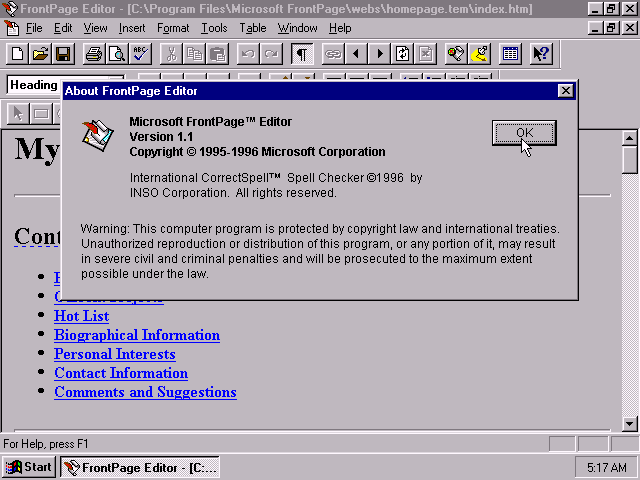
Microsoft FrontPage 1.1 screenshot.
FrontPage became hugely popular but it generated notoriously bloated HTML code with unnecessary tags, inline styles, and proprietary features that only worked properly in Internet Explorer. The code was shit. By 2003, it was dead.
Sound familiar to your “unfinished work problem?“
1997-2010: Dreamweaver’s Dominance (Through Listening)
Remember Kevin Lynch and the “19 Dreams” document? Months interviewing professional web designers. Building specifically what they wanted. Priced at $495. By October 1999, 66% of professional web developers used Dreamweaver. It dominated for over a decade.
But even Dreamweaver fell. Why?
2004-2010: The Cloud Revolution (New Category, New Winners)
Everything changed when cloud-based website builders emerged:
-
Squarespace: 2004
-
Wix: 2006
-
Shopify: 2006
-
Weebly: 2006
The category shifted from “desktop software for professionals” to “cloud platforms for everyone.” These platforms shared a common insight: web development could be dramatically simplified by moving everything to the cloud, such as editing, hosting, domain management, deployment, while hiding technical complexity behind visual drag-and-drop interfaces.
Desktop solutions like Dreamweaver couldn’t evolve fast enough. The transition from Flash to HTML5 killed them. By the 2010s, cloud builders had achieved growth that dwarfed the entire desktop software era.
As the category matured, more specialised tools enter the game, creating sub-categories such as landing page builders or plugins for e-commerce websites.
2020s-Now: AI-Assisted Everything (That’s You)
Now we’re in the AI era. Platforms like you, Lovable, Replit, Bolt… all saying basically the same thing:
“Build websites and apps without coding, but faster thanks to AI.”
So, why the history lesson, and what’s my point? We can learn a ton from the last 30 years and predict what is going to happen next.
Pattern 1: Categories fragment as they mature
-
Started with “HTML editors” (everyone)
-
Split into “cloud platforms” when technology shifted
-
Split again into “designer platforms” vs “e-commerce platforms” vs “general builders”
Pattern 2: Specialisation wins as fragmentation intensifies. For example, Dreamweaver stood the f*ck out by focusing on professional designers.
Pattern 3: With technical limitations come fresh struggles to solve. FrontPage died from bloated code outputs. But solving this brand new struggle led to Dreamweaver taking over.
Pattern 4: Category shifts happen faster over time. The desktop era lasted 15+ years. How long will the AI-assisted era take to mature?
And lastly. Perhaps the most important pattern of all…
Pattern 5: Once you’re settled in a category, there are only four ways to grow and none of them are within a marketer’s control. Dale Harrison calls them “Black Swan” events in this excellent interview. They are:
-
A massive cash injection. For example, Harrison cites Liquid Death with $350M+ in funding. In our case, multiple players like Lovable or Cursor have raised $1B+.
-
A market leader implodes. Remember when Dreamweaver imploded when it failed to adapt to a cloud-first approach and new web standards?
-
A 100x product innovation. A new solution solving a painful problem that has never been solved properly before. Again, does that ring a bell? Microsoft FrontPage.
-
And riding the category wave. “If the entire lake is rising, every boat rises with it,” says Harrison. In our case, the lake is the AI-assisted programming market and the boats are Hosting Horizons, Replit, and all the other players in that space.
Looking at those five patterns, I can predict your future.
Scenario 1 (Today’s Reality)
You continue to “ride the category” wave, while well-funded players capture more market share by being everywhere, all at once. You have the advantage of an existing customer base, but there’s a ceiling. Difficulty Level: Extra Hard.
Scenario 2 (True Innovation)
You make a breakthrough which enables users to finish what they started, no matter their skill levels. If direct competitors can’t catch up, you might have a shot at growing faster than them. Difficulty Level: Extra Hard.
Scenario 3 (Specialisation)
As category fragmentation accelerates, you find an opportunity to solve a problem faced by a smaller subset of users. Less competition, more chances to become #1. It’s the most resource-efficient path. Difficulty Level: Hard.
The Verdict
The history of web builders, first-principle thinking, and decades of marketing research all point to one conclusion: your chosen positioning is INDEFINITELY more critical than your brand distinctiveness, your feature set, or the aesthetics of your interface. You are at a critical juncture, facing a choice between three distinct paths. Selecting one is essential, as each leads to a fundamentally different Go-To-Market (GTM) strategy.
Score: 2.5 out of 5
Whatever you choose, choose soon.
Stage 3: Distinctive Brand
Stage 3 is about getting noticed for the right reasons without alienating your audience. It’s about building a distinctive brand that sticks in people’s minds and gives them something clear to rally around.
But for you, right now, this isn’t where the magic happens. And I’m not being dismissive. I’m being strategic. Because focusing your energy on brand distinctiveness when you haven’t nailed your category positioning would be like redecorating the bike shed instead of designing the nuclear reactor (also called bikeshedding, the tendency for a group to spend an excessive amount of time on a minor, simple issue while neglecting more complex and important ones).
The Lovable Trap (Don’t Fall For It)
It’s incredibly tempting to look at Lovable’s brand:
-
Their sexy heart-shaped logo
-
Their shamazing gradient colour scheme
-
Their cute little font
-
Their snazzy digital ads
And think: “That’s why they’re winning.”
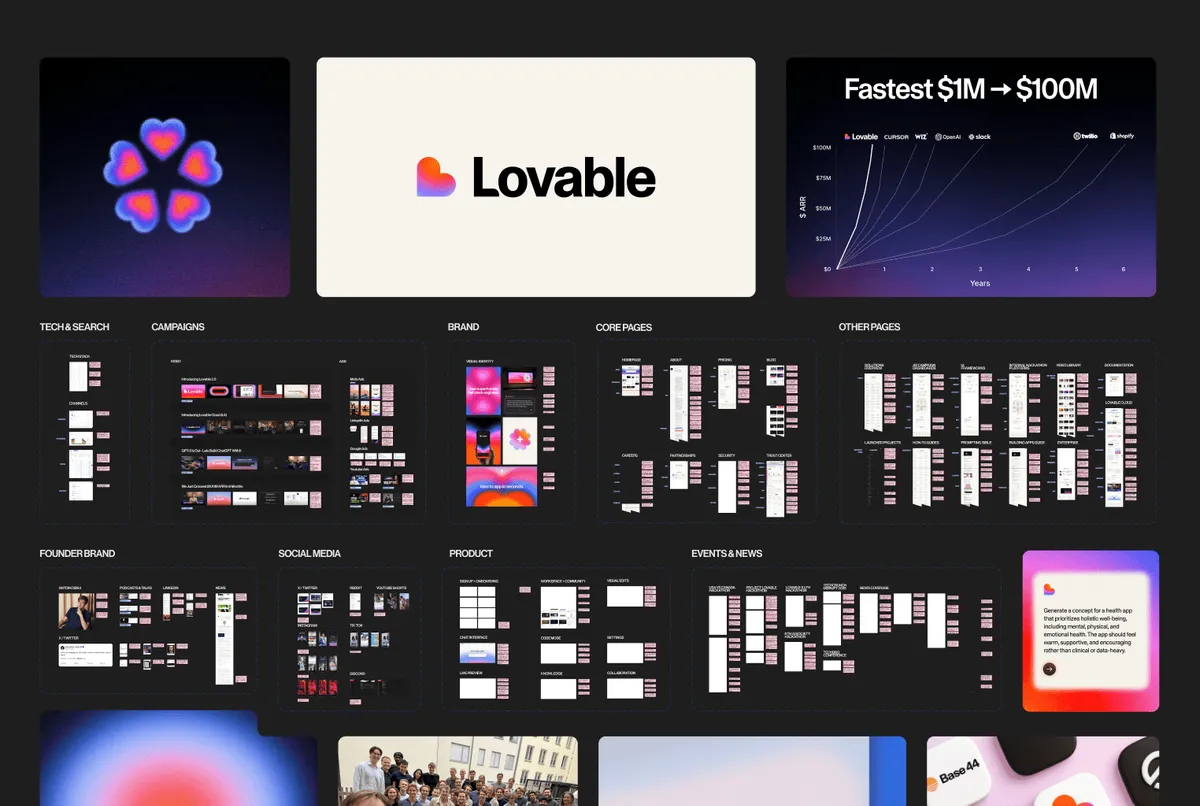
Lovable brand breakdown by Josh Lowman.
This is absolutely, categorically wrong. (Categorically. Get it?)
Lovable is growing fast because they’re in a (1) fast-growing category (2) with a huge pile of cash at their disposal. The brand is the tiny little cherry on top of a massive resource advantage. They can afford to flood channels with their distinctive brand because they have the cash to be everywhere. The brand doesn’t create the growth, because the cash infusion creates the reach, and the brand makes that reach more memorable.
Which means, correlation is not causation.
Your situation is different, of course. You don’t have $300M to play with. But you do have Hostinger infrastructure, customer base, and team. That’s your unfair advantage.
So yes, we’ll still go through the distinctive brand stage because there are a couple of growth mistakes to avoid, but I won’t spend too much time on it.
Monster: Depends On Your Scenario
Your monster, the enemy that represents your audience’s struggles, changes completely depending on which path you choose.
Scenario 1 (Today’s Reality): Your monster is probably traditional coding and slow development processes. The old way of building things. This is what Squarespace fought in 2005, what Wix fought in 2006. It’s a proven monster, but everyone’s already fighting it.
Scenario 2 (True Innovation): Your monster might very well be other AI platforms that create half-finished work and leave users drowning in uncertainty. This is a fresh monster that nobody’s really named yet. Much more compelling if you can actually solve it.
Scenario 3 (Specialisation): Your monster would depend entirely on which vertical and use case you pick. If it’s SaaS MVPs, maybe it’s the validation paralysis of perfectionism. Like bikeshedding, but for SaaS.
POV: The Squarespace Echo
Let’s talk about point of view, which is your bat-signal that shows you’re on your audience’s side. I went on one of my favourite websites, The Wayback Machine, to look at what the first cloud-based platforms were talking about when they first launched.
Here’s Squarespace’s homepage from 2005. Notice the “No technical skill is required” argument? Twenty years later, we’re still pushing the same narrative.
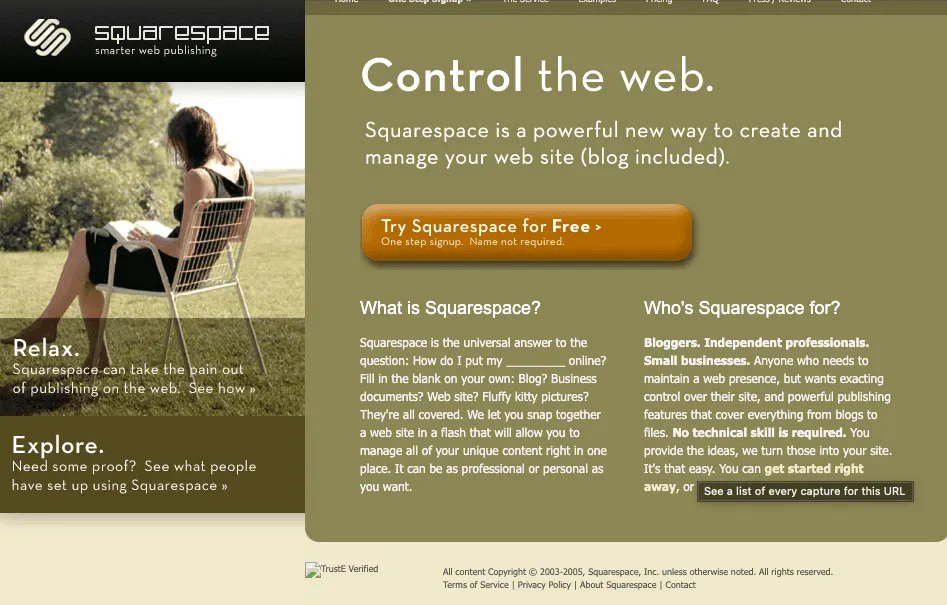
Everyone’s echoing the same POV that worked 20 years ago. You. Lovable. Replit. Bolt. But it’s not a bad thing. It just means that you’re touching on a timeless struggle.
Assets (About Category Conventions)
Despite everything I just said about brand not being your primary lever, there ARE category conventions you need to follow. Ignore these and you’ll confuse people. Follow them and you won’t f*ck with your growth.
What’s fascinating is how these conventions nod to the history of website building:
-
Chat-first interfaces: Everyone expects this now. The primary interaction is a conversation, not clicking through menus. This is the opposite of Microsoft FrontPage on Windows 95, which had so many buttons and options it was overwhelming.
-
Lots of white space: Clean, minimal, focused. Again, the opposite of those cluttered 1990s interfaces.
-
Pixel fonts and coding references: Companies use pixelated fonts. You see coding syntax in backgrounds. It’s a nostalgic nod to the early web, to terminal windows, to the hacker aesthetic.
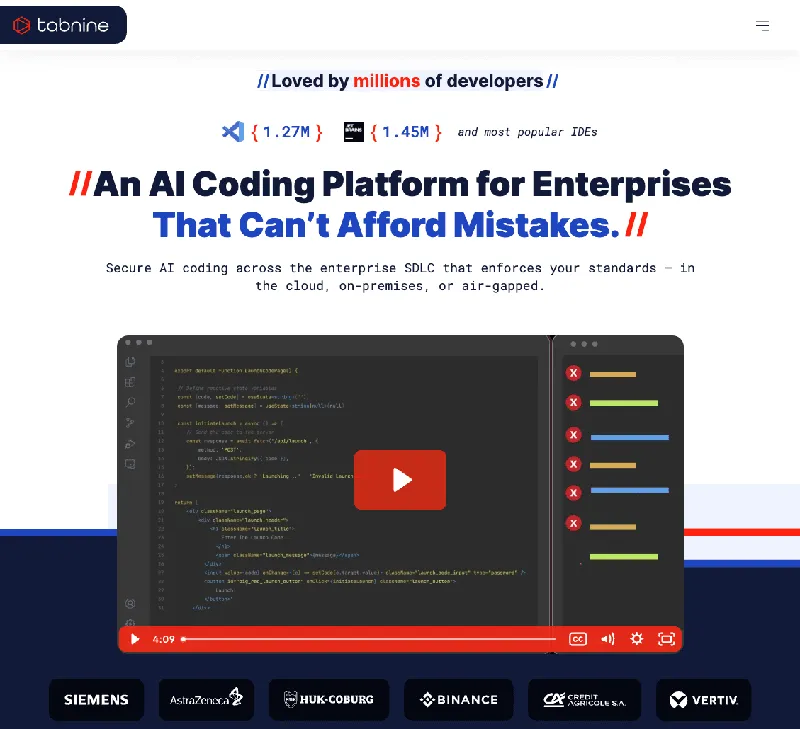
Tabnine homepage screenshot.
30 years on, we’ve gone full circle. Only difference? Instead of overwhelming toolbars, you have a single chat window.
As long as you follow these conventions and don’t try to reinvent what people expect from AI code platforms, you’re fine. The goal is to not look like you don’t belong, not to look like you invented a new visual language.
The Verdict
Score: n/a
I’m taking the bold step not to score you for this section. I know you understand why. As long as you follow category conventions and don’t confuse people about what you do, your brand is fine.
Stage 4: Continuous Reach
If Stage 3 wasn’t urgent for you, Hostinger Horizons, Stage 4 is make-or-break. You show the right message to the right people at the right time, continuously reaching as many of them as possible when they’re most ready to act.
The Horizontal Business Problem
When you’re a horizontal business with thousands of potential use cases, the biggest challenge isn’t building the product. It’s avoiding the overwhelming feeling that you need to be everywhere, for everyone, all at once.
Look at Zapier. They connect tools together, which means they have millions of possible use cases. You can use it to handle IT support tickets, curate a weekly newsletter, or send flowers to your lover every time it rains. So how do they handle it? They slice and dice in multiple ways. For example, on their website, these buying situations are broken down by team, app, and use case.
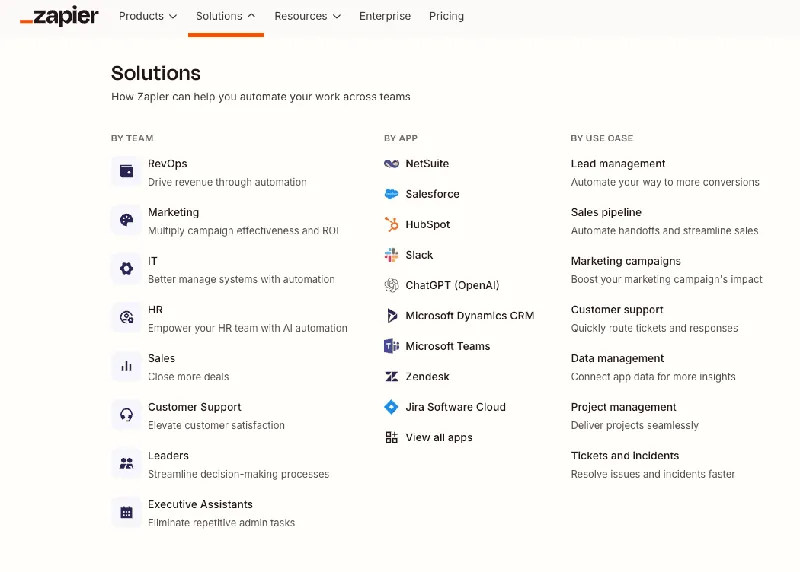
Zapier Solutions tab.
Click into any of those and you get one level deeper. Zoom deeper and deeper and deeper into more specific scenarios. For example, “Project management” use case leads to a page where you can zoom into more specific use cases and popular workflows.
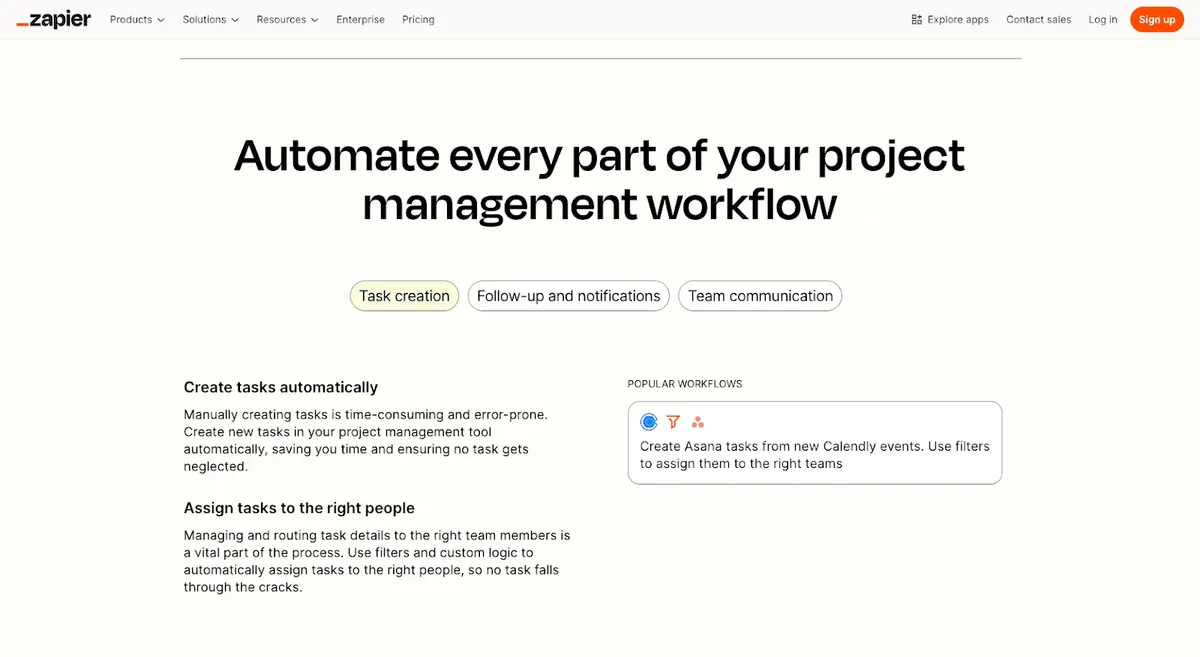
Zapier “project management” page.
You’ve already started doing this. You showcase pre-made templates:
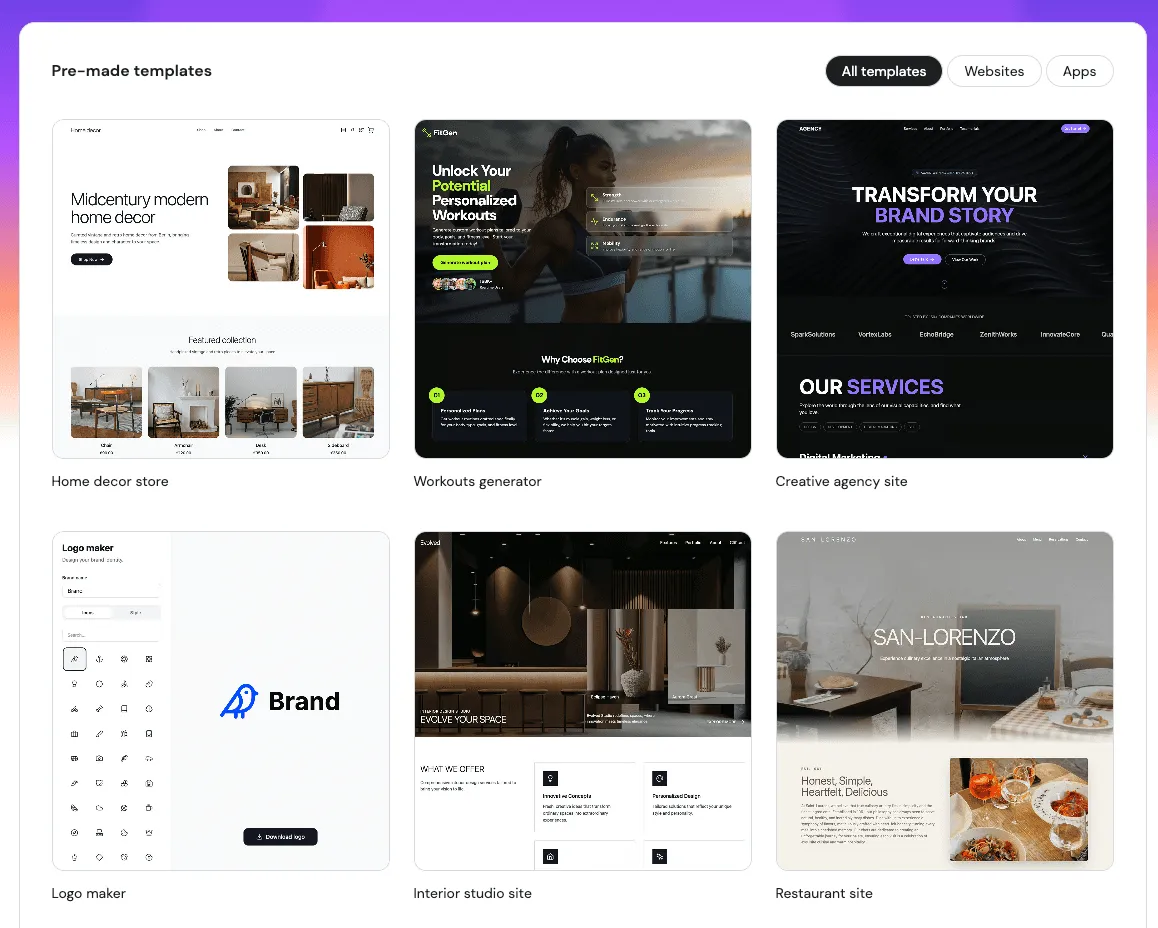
Horizons pre-made templates page.
As well as core use cases such as building a micro-SaaS or online store:
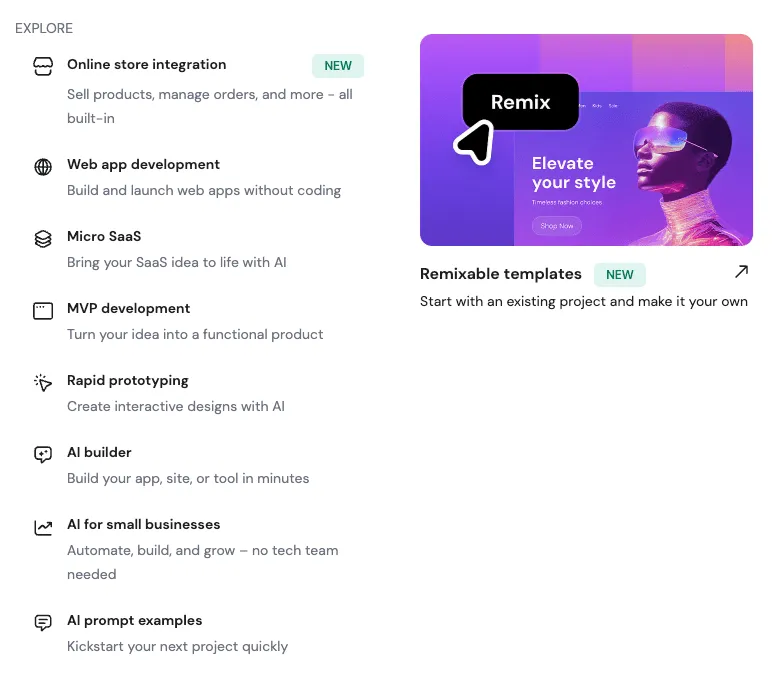
Horizons use case page.
Which then leads to more specific pages:
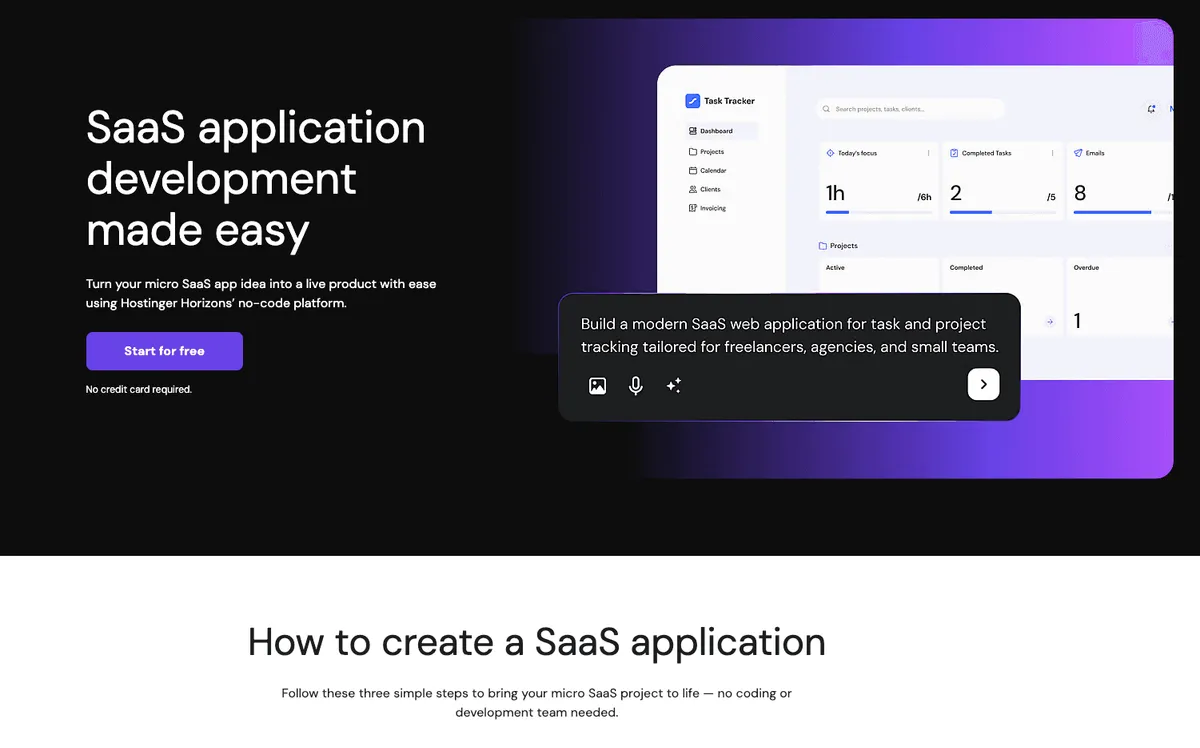
Horizons for SaaS page.
Adding use cases to your website menu is the easy part. But here’s where it gets hard: each of those categories needs its own trigger strategy, its own channels, its own messaging. And you don’t have infinite resources to execute on all of them simultaneously.
Triggers: The Situations That Make People Act
Here’s one of the most overlooked concepts in customer acquisition: people don’t take action unless something causes them to. A founder could be frustrated with hiring developers for years (the struggle) without doing anything about it. It’s only when they lose a potential customer because they couldn’t build fast enough (the trigger event) that they finally decide to find a better solution.
Scenario 1 (Today’s Reality): The Resource Nightmare
If you’re competing broadly in the AI no-code space for everyone, you need to be associated with hundreds and hundreds of different triggers in those categories:
-
First-time founders validating MVPs
-
Agencies building client sites under deadline
-
E-commerce entrepreneurs launching stores
-
SaaS founders prototyping features
-
Freelancers building portfolios
-
Internal teams replacing legacy tools
Each of those has different triggers, different timing, different urgency. You’d need to map every single one, prioritise the most common, and develop a GTM strategy for them. This is possible. But it requires massive resources to execute. Your VC-funded direct competitors can flood channels and be everywhere. Can you?
Scenario 2 (True Innovation): Copy/Paste
I could copy/paste what I said above, and it would apply here. The only difference is that a true innovation would make this trigger-based GTM strategy slightly easier since you’re giving users a more compelling reason for them to pick you.
Scenario 3 (Specialisation): Surgical Precision
If you pick one vertical, let’s say e-commerce, your triggers become more specific and less competitive:
-
Hit Shopify’s customization ceiling and frustrated
-
Got quoted $15k+ by a developer for a custom store
-
Need to validate product-market fit before big investment
-
Saw competitor launch faster with better site
Manageable number of triggers. Clear pain points. Specific moments when people are ready to switch. This is why specialisation is operationally easier. You’re not trying to be everything to everyone. You’re trying to own one vertical completely.
Channels: Where You Actually Show Up
Before we talk about specific channels, let me show you the systematic way to figure out where you should be. Let’s avoid random acts of marketing here: “Let’s try LinkedIn ads. Let’s sponsor a podcast. Let’s do SEO.” The right way is to map triggers to context, then context to channels. Let me show you what I mean.
The Trigger-to-Channel Mapping Process
For each trigger, we need to understand four things:
-
WHEN does this trigger happen? (time, frequency, duration)
-
WHERE does it happen? (physical/digital location)
-
WITH WHOM does it happen? (people present/involved)
-
WITH WHAT does it happen? (tools, resources, content they’re using)
Once we understand the context, the right channels become obvious. Let me show you how this plays out differently for each scenario.
Scenario 1 (Today’s Reality) and Scenario 2 (True Innovation): One of Hundreds
Let’s take the negative experience with current platform, one of the most common we saw in the subreddit mining.
Mapping the context:
Context
Details
WHEN
Right after the platform fails, during damage control, when explaining to team/client why timeline is blown
WHERE
Competitor subreddits (r/lovable, r/replit), Twitter complaints, team Slack channels, project management tools
WITH WHOM
Frustrated alone, venting to teammates, asking developer communities for alternatives
WITH WHAT
Screenshots of errors, broken deployments, half-finished outputs they can’t debug
Channel mapping:
Best Channel
Type
Objective
Rationale
Reddit community presence
Social
Brand-building
Be present in competitor subreddits when frustration peaks, offer helpful perspective without being salesy
Comparison landing pages
Search
Demand-capture
When they Google “Lovable alternative” or “Replit vs other options,” you show up with honest comparisons
Developer community partnerships
Partnership
Brand-building
Partner with indie dev communities where platform switches get discussed
The problem: This is just ONE trigger for ONE type of user (people switching platforms).
In Scenario 1, you’d need to map:
-
First-time founders launching MVPs (different trigger, different context, different channels)
-
Agencies building client sites (different trigger, different context, different channels)
-
E-commerce entrepreneurs (different trigger, different context, different channels)
-
Freelancers building portfolios (different trigger, different context, different channels)
-
Internal teams replacing legacy tools (different trigger, different context, different channels)
That’s five completely different channel strategies you need to execute simultaneously. And I only listed five — there are dozens more. This is why Scenario 1 requires Lovable-level resources. You need to be everywhere because your triggers are everywhere.
Scenario 3 (specialisation): Surgical Precision
Let’s take the “I’ve hit Shopify’s customisation ceiling,” specific to e-commerce entrepreneurs. Mapping the context:
Context
Details
WHEN
After weeks/months building on Shopify, moment they realize “I can’t do [specific thing] without hiring a developer,” during competitive pressure when they see better competitor sites
WHERE
r/shopify subreddit (150K members), Shopify Facebook groups, indie maker communities, e-commerce Twitter, “Shopify limitations” Google searches
WITH WHOM
Other Shopify users commiserating, asking for developer recommendations, seeking alternatives, comparing notes on limitations
WITH WHAT
Shopify stores that hit walls, feature requests Shopify won’t build, competitor sites they’re jealous of, quotes from developers ($15K+)
Channel mapping:
Best Channel
Type
Objective
Why This Works
The “Shopify Ceiling” Community Program
Community
Both
HERE’S THE SPECIFIC PLAY ->
Here’s the specific play we could execute.
Phase 1: Become the Helpful Expert
Deploy 2-3 team members into r/shopify and major Shopify Facebook groups. Not to sell, but to genuinely help. Every day, there are posts like:
-
“Can I add [custom feature] to my Shopify store?”
-
“Shopify won’t let me do [X], what are my options?”
-
“I need [specific functionality], do I have to hire a developer?”
Your team provides helpful, detailed responses:
-
“Here’s why Shopify doesn’t support that…”
-
“Here are three workarounds you could try…”
-
“If workarounds don’t cut it, here’s what you’d need custom-built…”
-
And then, naturally: “By the way, I built something similar with Horizons in a few hours. Happy to share how if you’re interested.”
Phase 2: Create the Comparison Hub
Build and maintain a public resource (built with Horizons, ofc):
“Everything Shopify Can’t Do (That Horizons Can)”
Document every limitation, organized by category:
-
Checkout customization
-
Product page features
-
Custom cart logic
-
Email automation beyond basics
-
Multi-currency handling
-
Subscription modifications
For each limitation:
-
Why Shopify won’t add it
-
How much a developer would charge to build it
-
Example of it built in Horizons (with screenshots/links)
-
Time to build (usually hours, not weeks)
This becomes the resource that community members link to. You don’t even have to share it — they do it for you.
Phase 3: The Migration Program
Launch “Shopify to Horizons in a Weekend” guided migration:
-
Live cohort-based workshop
-
Bring your Shopify store
-
Rebuild it with Horizons in real-time
-
Learn to add features Shopify couldn’t do
-
Ship by Sunday night
Price it low ($99) or even free for first cohorts. The goal isn’t revenue — it’s creating success stories and word-of-mouth.
Supporting channels:
-
SEO for “Shopify alternative for [specific feature]”
-
Partnerships with Shopify theme developers (they know the limitations)
-
Case studies featuring real migrations with ROI data
Why this might work:
-
You’re there at the exact trigger moment… When they hit Shopify’s ceiling, you’re already the helpful presence who understands their problem
-
You’re helping. By the time they need a solution, you’re the obvious choice.
-
It’s surgically focused. This is ONE channel strategy for ONE vertical. Totally achievable with your resources.
Your Current Approach (And Why It’s Not Enough)
Here’s what you told me: “The Hostinger ecosystem is naturally a strong driver. Beyond that, influencers, affiliates, and referral programs account for the bulk of our conversions.” You also said: “We’re creating content on organic social media and YouTube, working with influencers, partnering with newsletters. We’re taking our time and building trust without overextending.”
Translation: You’re being cautious with limited resources. I get it.
But here’s the problem:
For Scenario 1 (competing broadly), your current approach hits a ceiling. You’ll grow as fast as your Hostinger audience grows, but you won’t dramatically expand beyond that. Lovable can flood every channel with their $300M. You can’t.
For Scenario 2 (true innovation), your current approach could work - IF you solve the unfinished work problem. Word-of-mouth would carry you. But you’d still need focused execution around that specific pain point.
For Scenario 3 (specialisation), your current approach becomes much more focused. Instead of vague “influencer partnerships,” you partner with specific Shopify influencers. Instead of generic “organic social,” you dominate r/shopify. Instead of broad “building trust,” you build trust with e-commerce entrepreneurs specifically.
The difference is night and day.
The Verdict:
You are executing the “safe” playbook for a horizontal business, but you lack the massive resources required to win Scenario 1. Your reach is currently tied to your existing ecosystem rather than being surgically mapped to the specific triggers that drive category demand. For this reason, I believe you are spread too thin to achieve the focus needed to stand the f*ck out.
Score: 2 out of 5
Total Score
9 out of 15
After digging through the history books, mining the subreddits of your best-funded rivals, and using your product myself, it’s time to face the music. You are a great listener in a market that is currently screaming at the top of its lungs.
Stage
Score
Reasoning
Stage 1: Insight Foraging
4.5 / 5
Your foundation of customer empathy is rock solid, and your willingness to conduct real customer interviews is f*cking rare for a company of your size.
Stage 2: Unique Positioning
2.5 / 5
You understand the users, but you haven’t made a choice. Because you solve the same rational struggles as everyone else, a truly unique position is currently impossible.
Stage 3: Distinctive Brand
n/a
I’m refusing to score this. Redecorating the bike shed (your brand) is a waste of energy until you finish designing the nuclear reactor (your strategy).
Stage 4: Continuous Reach
2.0 / 5
You are playing it safe. You are spread too thin across too many verticals to achieve the surgical precision needed to win.
Wrapping up
Remember my teenage self staring at Dreamweaver, overwhelmed by possibilities, ultimately building nothing? That’s you right now. The AI no-code category is speed-running 30 years of evolution in 3 years. The winners won’t be the ones with prettier interfaces; they’ll be the ones who picked the right lane and executed with surgical precision.
A big merci to the team at Hostinger, in particular Gabriele Muleviciute and Pilar Barberena, for being great sports!!
Curious about what Hostinger has to offer? Use the code “STFO” at checkout to get 10% off on ALL of their products.